
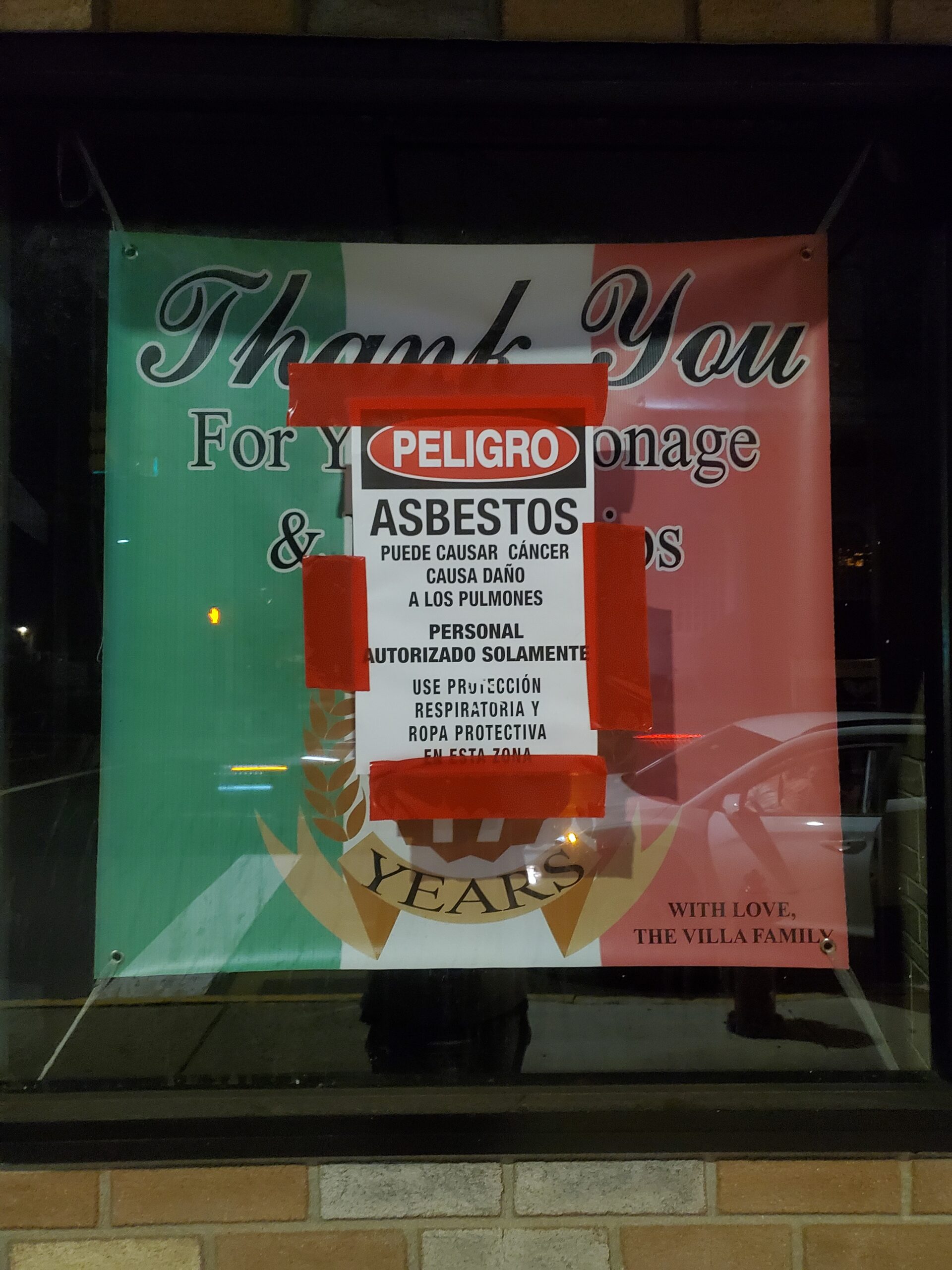
ASBESTOS FOUND AT OLD ITALIAN VILLA LOCATION! The building was rumored to be scheduled for demolition.
NORTH ARLINGTON – The old Italian Villa location has asbestos, and sources say the removal will be mandatory before any demolition can occur that would make way for more apartments along Ridge Road.
The collection of empty and dormant retail space was expected to be demolished as well for more apartments and housing, but the discovery of asbestos probably delays any further action until removal is complete.
Asbestos is a group of naturally occurring fibrous minerals that were widely used in construction and manufacturing due to their durability, heat resistance, and insulating properties. However, it is now well-known to be hazardous to human health.
Asbestos removal from a building or structure is a highly regulated and sensitive process due to the serious health risks associated with asbestos exposure (such as mesothelioma, lung cancer, and asbestosis).
Here’s a clear overview of the steps and key considerations involved:
When asbestos-containing materials (ACMs) are disturbed, tiny fibers can be released into the air and inhaled. Prolonged exposure can lead to serious health issues.
1. Inspection & Testing (Asbestos Survey):
Performed by:
Licensed asbestos inspector
Purpose:
Identify and assess materials that contain asbestos
Types of surveys:
Refurbishment/Demolition survey: Before major work or demolition.
2. Planning & Notification:
Notification required:
Asbestos Removal Control Plan (ARCP):
Must be prepared by the removalist detailing how the job will be done safely.
3. Hiring a Licensed Asbestos Removal Contractor:
DIY asbestos removal is illegal or highly discouraged in many places.
A certified/licensed contractor trained in:
Containment
Air monitoring
Safe disposal
4. Site Preparation:
Seal off the area using plastic sheeting and negative air pressure units
Warning signs posted
Disconnect HVAC to prevent spread
5. Asbestos Removal:
Workers wear full PPE (respirators, coveralls, gloves)
Materials are wet down to reduce dust
Removed intact (whenever possible) to reduce fiber release
Bagged in leak-tight containers with hazard labeling
6. Clean-Up & Air Monitoring
HEPA vacuuming and wet wiping
Independent air clearance testing (using PCM or TEM analysis)
Area cannot be reoccupied until air quality is safe
7. Proper Disposal:
Waste must go to a licensed hazardous waste facility.
Disposal manifests may be required for documentation.
NA Today will cover this story as more information becomes available to the public.