

THE PITFALLS & PERILS OF EMINENT DOMAIN SEIZURE.
North Arlington needs to learn the lessons of the failed EnCap housing scheme, time for the Board of Education and the Archdiocese of Newark to continue negotiations until a consensus can be reached!
North Arlington – Eminent domain seizure has reared its ugly head here in New Jersey as a 175-year-old private farm is being targeted by a local government for 130 units of affordable housing. An action that is dividing Cranbury over the agricultural and historical impact on the municipality as well as an overreach by local government.

This almost occurred here in North Arlington some 18 years ago when the Mayor & Council led by Peter Massa stopped the EnCap housing initiative that was faulty and financially failing, as the developer could not secure state funding to remediate the properties that could have led to the end of Porete Avenue, and Federal Express never would have relocated to North Arlington which was supported on a bipartisan basis.
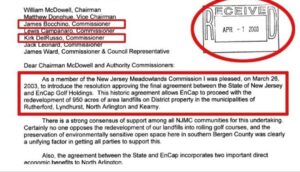
Unfortunately, the last remnant of supporting eminent domain seizure remains on the council as incumbent Kirk Del Russo (R) who formerly served on the Borough’s now defunct Redevelopment Authority, was an unquestioned and unbridled supporter of the failed EnCap housing scheme.

Del Russo a part-time real estate agent and state employee, is staying silent on the latest move by the North Arlington Board of Education to assume control of the La Salle Center owned by Queen of Peace Church. Negotiations have apparently broken down and they seem to be at an impasse of sorts. A packed house attended a recent meeting of the Board of Education where an overwhelming number of those in attendance oppose eminent domain seizure against QP. 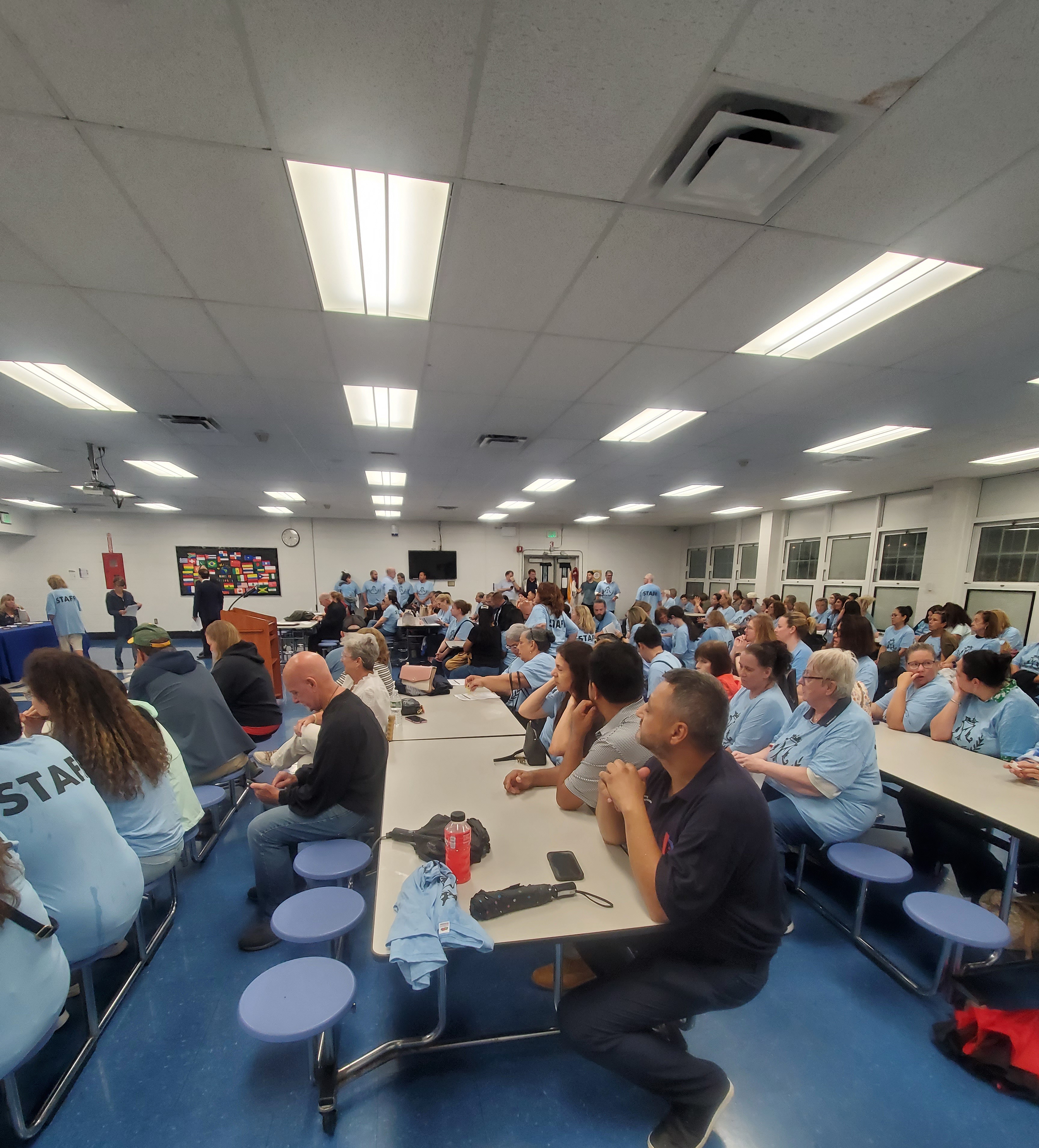

Del Russo avoided the meeting, as did every Republican elected official including Mayor Dan Pronti, also a real estate agent and retired cop.
But the Democrats seeking to break the all-Republican stranglehold of holding all seven seats on the governing body agree with Queen of Peace and that the notion of eminent domain seizure be avoided at all costs.
The candidates who did attend, John Balwierczak and Cengiz “Jim” Sever believe “negotiation and consensus” is necessary to prevent dividing North Arlington on a process that can be easily avoided. 
“Eminent domain seizure has no place in these negotiations. The BOE and QP have successfully worked together on past transactions. Eminent domain is the equivalent to placing a gun to the head of the property owner. It is adversarial and sends the wrong message that you can be forced to sell.” offered both Balwierczak and Sever, the council ticket opposing Kirk Del Russo.
While the stalemate between the BOE and QP could be successfully negotiated, the whole notion of eminent domain needs to be seriously reformed and revisited:
For what are the pitfalls of eminent domain seizure and the impact on homeowners and taxpayers in NJ?
Eminent domain—the government’s power to take private property for public use, with just compensation—has long been controversial, especially in a densely populated and highly developed state like New Jersey. While intended to serve public interests (e.g., roads, schools, utilities), its implementation can carry significant pitfalls and ripple effects for homeowners and taxpayers.
Pitfalls of Eminent Domain Seizure in New Jersey:
1. Displacement and Emotional Toll on Homeowners
Loss of home and community ties: For many, a home isn’t just a financial asset—it’s where family roots are established. Eminent domain can forcibly remove residents from lifelong neighborhoods.
Insufficient compensation: “Just compensation” is based on fair market value, which often doesn’t account for sentimental value, relocation costs, or future appreciation.
Legal battles: Challenging a seizure often requires hiring attorneys and experts, which can be expensive and emotionally draining.
2. Questionable Public Use Justifications:
Use for private development: In New Jersey, especially after the Kelo v. City of New London decision (2005), eminent domain has sometimes been used to transfer land to private developers in the name of “economic development.”
This has led to:
Public skepticism.
Legal challenges based on the Fifth Amendment and NJ State Constitution.
Increased litigation and political backlash.
3. Property Value Depreciation and Blight Declarations:
“Blight” as a legal loophole: New Jersey municipalities sometimes declare neighborhoods “blighted” to justify seizures, even in cases where properties are well-maintained.
This can:
Depress nearby property values.
Create uncertainty and discourage investment.
Reduce neighborhood morale.
Impact on Taxpayers:
1. High Legal and Administrative Costs:
Eminent domain cases can lead to costly litigation, often spanning years.
If property owners win in court, governments (i.e., taxpayers) may owe additional compensation and legal fees.
2. Public Project Cost Overruns:
The land acquisition process may delay public infrastructure projects, inflating construction and interest costs.
Mismanagement or failed redevelopment (e.g., stalled private projects) wastes public funds.
3. Long-Term Fiscal Impact:
Promised public benefits from seized land (e.g., jobs, increased tax base) may not materialize.
Projects can underperform or fail, leaving vacant lots, unused infrastructure, or abandoned developments—ultimately becoming a liability (this could have been the case on Porete Avenue had EnCap been approved).
New Jersey-Specific Concerns:
Urban redevelopment abuse: Cities like Newark, Atlantic City, and Camden have used eminent domain controversially to promote casinos, shopping centers, and condos—some of which were never completed.
Public backlash and reform efforts: Several NJ legislators have pushed for eminent domain reform, especially around clarifying the “public use” requirement and tightening definitions of “blight.”
Summary: Who Loses and Who Gains?
Stakeholder
Likely Impact
Homeowners:
Loss of property, emotional stress, under-compensation
Taxpayers:
Potential for higher taxes, cost overruns, failed projects
Developers:
Potential gain if land is acquired cheaply and projects succeed
Municipalities:
Short-term gain in land control, long-term risk if projects fail
North Arlington needs to keep a close eye on these negotiations between the Board of Education and QP.
While Pronti and his all-Republican Borough Council are taking no position, they have not gone on the record opposing eminent domain seizure either.
That is hardly “neutral” by any stretch of the imagination.
Only the two Democrats seeking council seats in November are taking a clear and concise position that is pro-property owner, pro-homeowner and pro-taxpayer and that’s John Balwierczak and Cengiz “Jim” Sever.
No eminent domain seizure!